

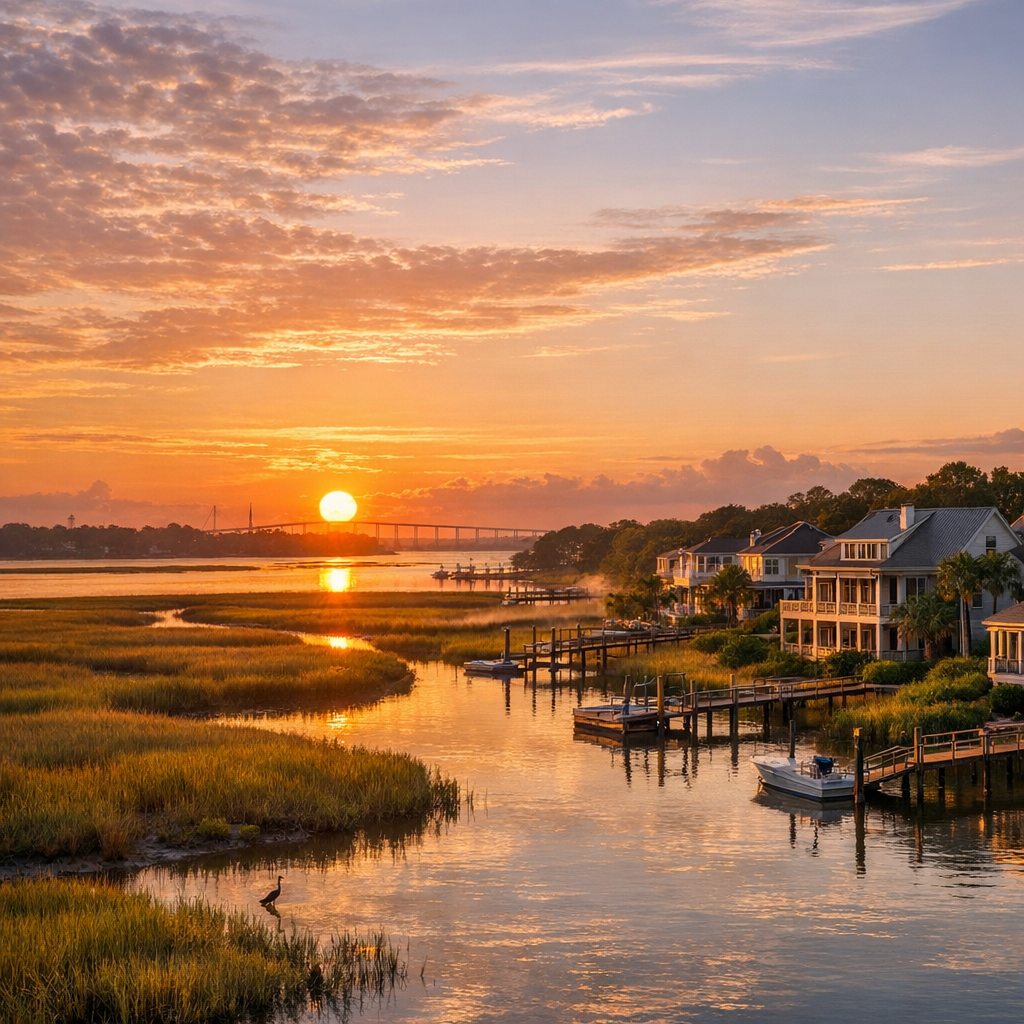
Living along the Lowcountry shoreline means we’re no strangers to salt air, intense humidity, and summer squalls—but what’s been changing lately is more than just the usual seasonal pattern. Mount Pleasant, like much of coastal South Carolina, is feeling the effects of broader environmental shifts spurred by warming temperatures, rising seas, and more frequent heavy rainstorms.
Rising Seas & Flooding Risks
The shoreline near Charleston has already seen nearly a foot of sea level rise over the last century, a trend that is accelerating. Projections suggest another 1 to 4 feet could come by 2100, depending on how global emissions evolve. That amplifies flooding during high tides, storm surges, and even routine rainfall events that push water into low-lying streets and marshlands.
Even without a hurricane, today’s high tides can flood areas around Shem Creek, Belle Hall, and portions of Hamlin. Infrastructure like sewer lines, roads, and bridges are increasingly stressed during moderate weather events—a change earlier generations wouldn’t recognize.
Shifting Weather Patterns
Warmer air means more moisture in the atmosphere. As a result, rainfall in the Charleston region is becoming more extreme: deluges dropping three or more inches in a single day are showing up more often. At the same time, longer stretches of hot, dry weather are taxing lawns, gardens, and water supplies.
Summer heatwaves—those days over 95°F—are expected to grow more common. Winters are milder, with fewer frost nights. Though snowfall remains rare, unusual cold snaps can still surprise us.
Water & Ecosystem Concerns
With rising seas pushing saltwater further upstream in our rivers, freshwater sources and marshes are under threat. Saltwater intrusion can impact aquifers, plant life, and the delicate balance between fresh and brackish ecosystems.
Meanwhile, warming ocean waters and changes in rainfall affect our marshlands and estuaries. Shellfish beds, nursery grounds for fish, and coastal vegetation are all sensitive to salinity, acidity, and temperature shifts. Plus, beach erosion is a growing concern as shoreline buffers weaken.
What Locals Can Do
Adaptation matters. From planting native, drought-tolerant vegetation and protecting wetlands to supporting policies that improve stormwater drainage and limit coastal development in vulnerable zones.
We can also contribute by conserving water during dry spells, reducing carbon emissions (like minimizing car trips or improving home insulation), and staying informed—checking flood maps, following forecasts, and helping out with community planning efforts.
Mount Pleasant’s identity is tightly connected to its coast, its waterways, and its natural beauty. As our climate nudges us toward a different future, understanding what’s changing gives us a chance to respond with foresight—so that this place we call home endures well into the decades ahead.